Beginning to learn the sitar
In October 2023, I had the pleasure of watching a live performance of Anoushka Shankar’s quintet. While I had heard her albums before, listening to it live is a whole different experience. I decided soon after that I would start learning the sitar. I also started listening to more and more Hindustani classical recordings around this time, by artists including Ali Akbar Khan, Ravi Shankar and Shujaat Khan. Back then, I often skipped ahead to the drut gat (think fast, melodic compositions) sections of recordings, or opted to listen mostly to dhuns (folk songs). Over time, I began to enjoy alaps (solo explorations of ragas) and vilambit (slower BPM) just as much, if not more. Most listening material is in the form of live recordings (as opposed to studio albums). YouTube is a great source for this, as is Darbar Player.
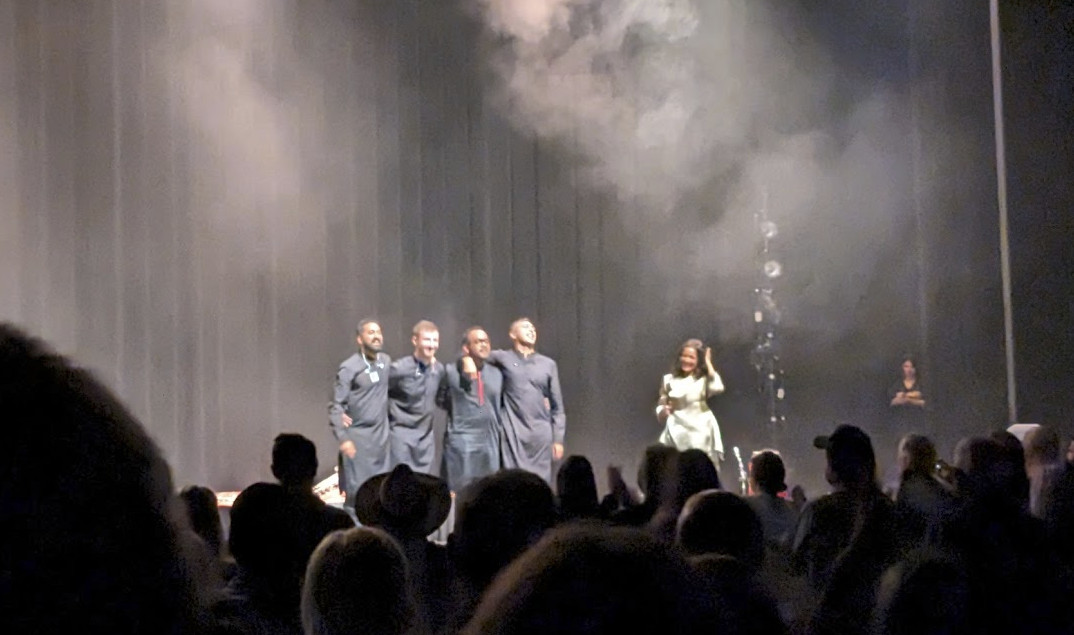
Anoushka Shankar's quintet. Yes, this blurry picture is the only one I have of the concert.
Fast-forward to July 2024 - I found a great teacher to learn the sitar from. I’ve been playing the electric guitar for many years. While some of my dexterity from guitar-playing transferred over to sitar-playing: the style of holding, picking and fretting the sitar is very different, and requires a lot of practice. One example: I tend to struggle with fast ascends and descends on the sitar, as it requires rapid movement of the left arm climbing up/down the main string. Whereas on a guitar, you have easy access to the higher/lower strings!
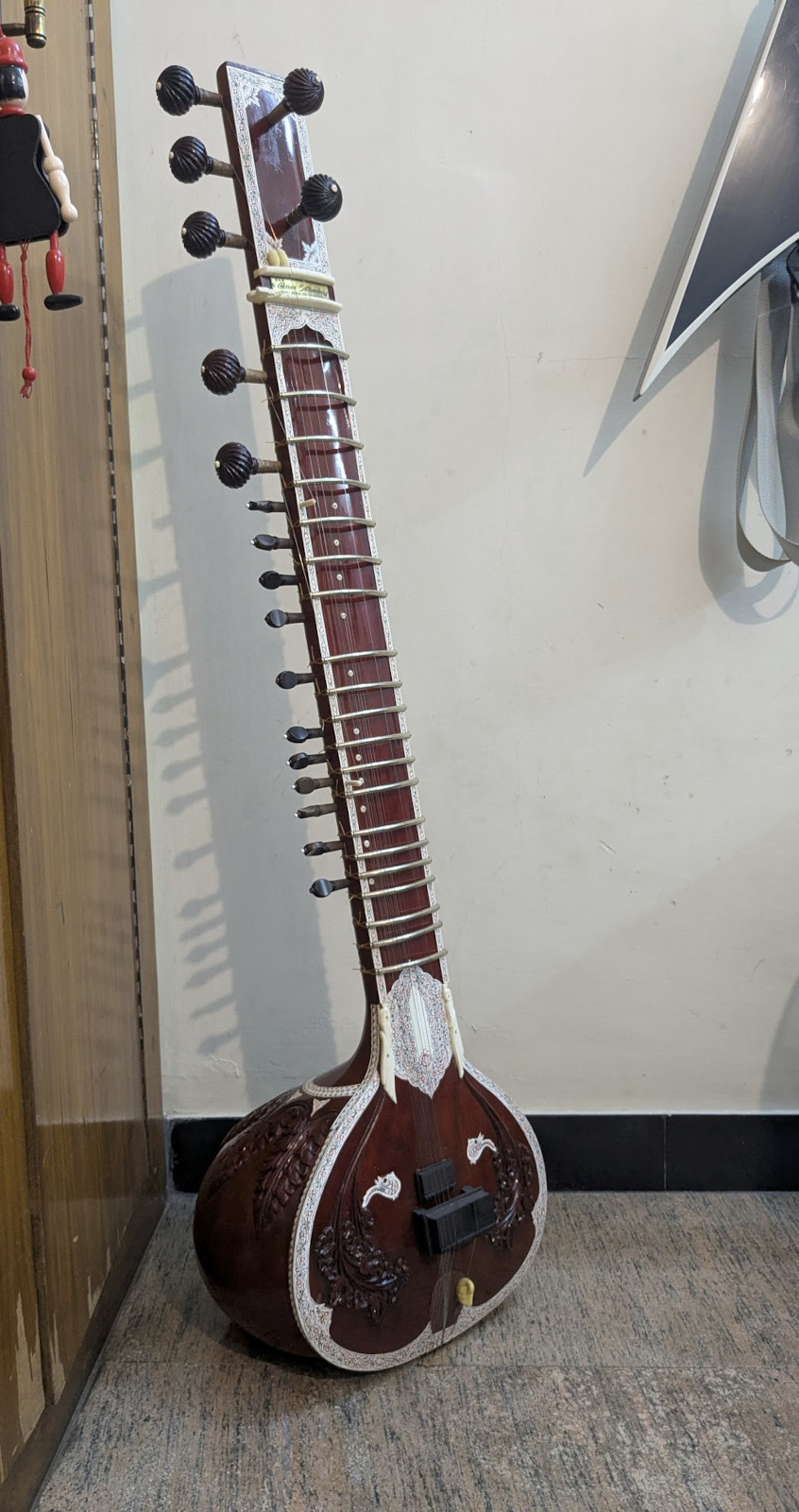
My sitar
Something I didn’t foresee coming was that my hearing has considerably improved. I can hear subtleties in music that I did not notice before. I can better play by ear, and enjoy listening to Hindustani classical music a lot more. An important aspect of sitar practice is meend aka string bending/pulling. These are very precise and elaborate legato movements, that can span multiple steps and incorporate vibratos. In order to play a correct meend, you need to be able to hear well enough to tell whether you’re off, and if yes by how much, and in what direction. It also takes a while to build the finger strength and calluses for practice.
Prior to picking up the sitar, I had the feeling of being in a musical rut. Trying to write a song, or practice the guitar often felt uninspiring. Practicing Hindustani classical music has opened a whole world of ragas, new artists, and instruments to listen to. I am, once again, inspired to practice!